Apartment and condo movers on Long Island
In a building, the move is only half about your furniture. The other half is the building itself: what hours it allows moves, which elevator you get, what insurance it wants on file, and how far the truck has to park from the lobby.
The paperwork the building wants
Most managed buildings, condos and co-ops require a certificate of insurance naming the building, the management company and sometimes the board, with specific coverage amounts, before they will let a crew in the door. Send us the building's requirements sheet the moment you have it. A COI takes a little time to issue and it is the most common reason a move stalls at the lobby.
Buildings frequently want a move-in date registered in advance and may hold a refundable deposit against damage to common areas. Those are between you and management, but they run on the same calendar as the move, so start them early.
Elevators, stairs and walkups
Where there is a service elevator it usually has to be reserved, and it typically comes with padding and a fixed block of time. That reservation drives the whole schedule, so we build the crew's day around it rather than the other way round. If two moves are happening in one building on the same day, that block is not flexible.
Walkups are a different calculation. Three flights of stairs turns every trip into a real carry, and it is the flights plus the number of trips, not the distance to the new address, that sets the hours. Say the floor number when you ask for a quote.
Getting the truck close
Loading zones, garage clearance heights and gate access all matter more in a complex than at a house. A garage with a low clearance means a smaller truck or a longer carry from the lot. A building with one loading door means waiting your turn. Tell us what the access looks like and, if you can, where the truck is actually allowed to sit.
Move hours are usually restricted too. Many buildings permit moves only on weekdays, within set hours, and not on holidays. That narrows the calendar, so ask management for the rules before you commit to a date.
Protecting the common areas
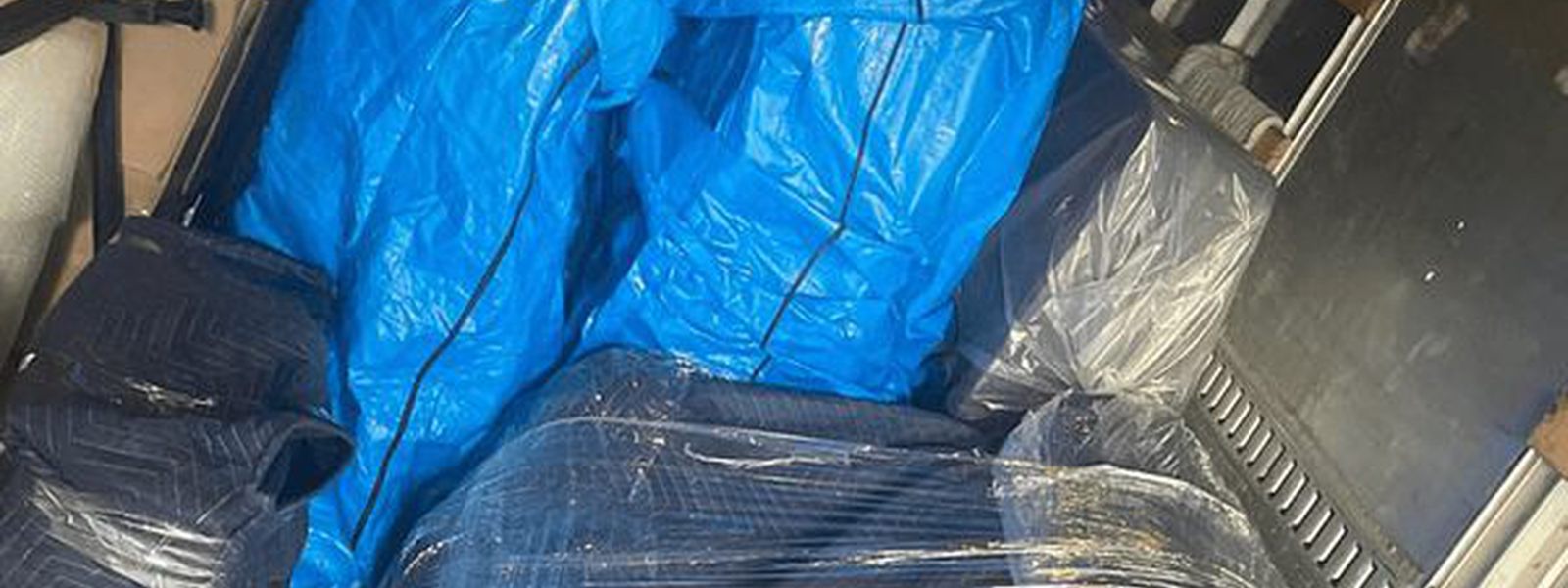
Damage in a hallway or a lobby is what deposits get held against, so runners go down on the path from the door to the elevator, corners and doorframes get padded, and the elevator gets its own protection where the building has not already put it up. It is the same care as a house, applied to a route you share with everyone else who lives there.
25+
Years moving Long Island
2
Counties covered, Suffolk and Nassau
7 days
A week we run crews
$0
Hidden fees on a quoted job
Licensed and insured. NYSDOT #42381, USDOT #4161235. Certificates of insurance provided for buildings that require one.

Book a walkthrough, keep the Starter Kit
Three professional-grade boxes, two rolls of tape and one of the moving blankets our crews use on real jobs. Yours to keep, for moves of two bedrooms and up. No purchase and no obligation.
See what is in the kit