Safe moving on Long Island
Safes concentrate several hundred to several thousand pounds into a footprint the size of a nightstand. Moving one is a question of weight, route and equipment, and the answers have to be known before anybody puts hands on it.
The weight has to be a number, not a guess
The single most useful thing you can send us is the make and model, or the weight off the plate or the manual. A tall gun safe, a fire-rated document safe and a commercial floor safe all look similar in a photo and can differ by a factor of five in weight, and that number decides the equipment and the approach.
Empty it before the day. Everything comes out: contents, shelving, and any interior fittings that lift out. On a gun safe that means the firearms are removed, secured and transported by you, which is where that responsibility belongs.
The route, and what the floor underneath can take
Safes tend to live in basements, garages and closets, which are rarely the easiest places to get something heavy out of. The route gets walked first: doorway widths, turns, stair width and rise, threshold heights, and whether the truck can park close to that door.
Stairs are the crux. Going down is often harder than going up because the load wants to run away, and the treads have to take a concentrated point load with the safe on a stair dolly. Wood decks, cantilevered stairs and older basement steps get looked at carefully, and sometimes the answer is a different exit than the obvious one.
Protecting floors on the way through
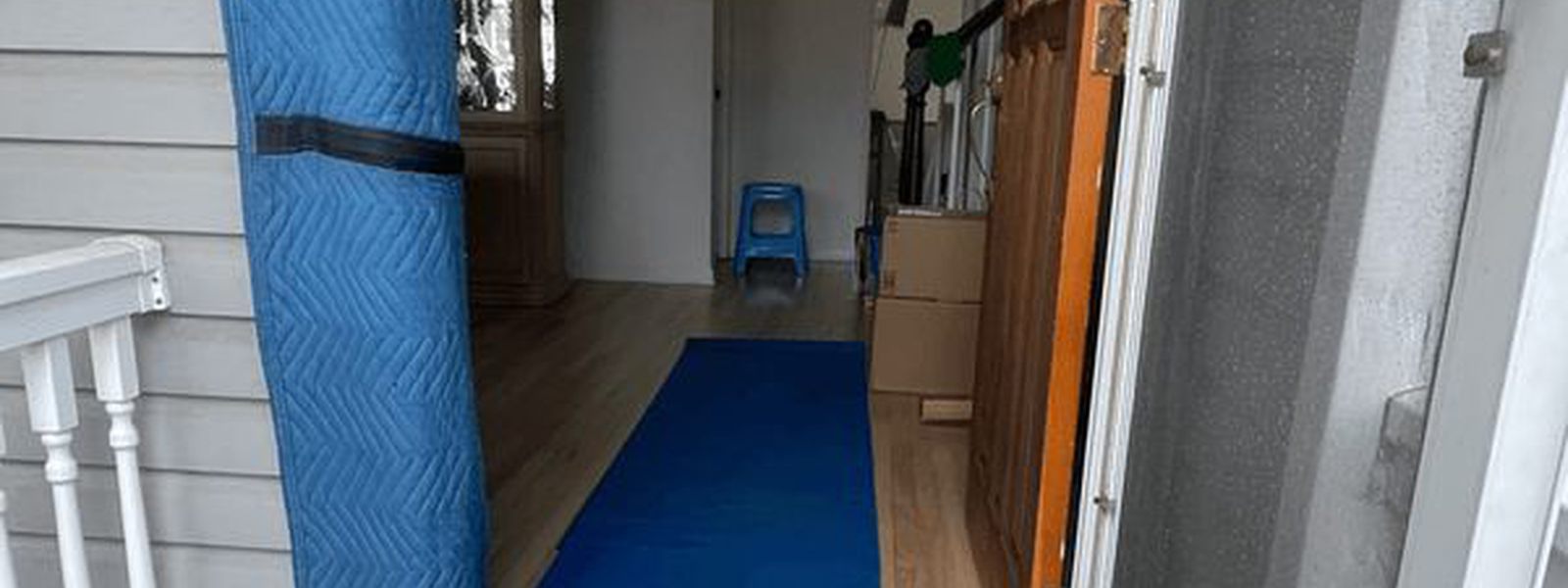
Nothing marks hardwood, tile or vinyl faster than a safe. It never gets dragged. Plywood, runners and padding go down along the whole route so the weight rolls over protection rather than over your finish, and door casings get padded at the pinch points.
The destination spot matters too. Confirm exactly where it is going before it comes off the truck, since repositioning a safe once it is set down is its own operation. If it will sit on an upper floor, think about what is under it: joist direction and span are worth a look for the heavier models.
Anchoring and access
If the safe was bolted down at the old place, it has to come loose before move day or the crew arrives to a job that cannot start. Re-anchoring at the new house is a job for whoever handles that kind of work, since it means drilling into a slab or a subfloor. Keep your combination or key with you rather than in the safe, which is a more common problem than it sounds.
25+
Years moving Long Island
2
Counties covered, Suffolk and Nassau
7 days
A week we run crews
$0
Hidden fees on a quoted job
Licensed and insured. NYSDOT #42381, USDOT #4161235. Certificates of insurance provided for buildings that require one.

Book a walkthrough, keep the Starter Kit
Three professional-grade boxes, two rolls of tape and one of the moving blankets our crews use on real jobs. Yours to keep, for moves of two bedrooms and up. No purchase and no obligation.
See what is in the kit